Alegrías is the palo dancers ask for most on stage, and it is the one that scares guitarists most, because it has a shape. If you know the shape, you can follow almost any dancer. If you do not, you will be lost by the silencio.
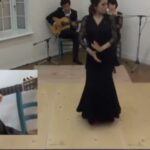
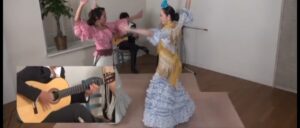
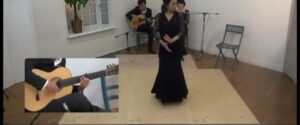
Here is an explanation of the structure in the original Japanese audio, followed by an Alegrías performance with a real dancer and singer. Use the English notes below and check the player for available caption tracks.
The parts, in order
- Guitar intro and salida. You set the tempo. The singer warms up (“tiriti tran”) and the dancer enters.
- Letra. The singer leads. You keep the compás light and stay out of the way. Watch for the dancer’s llamada that ends it.
- Silencio. The slow minor section. The dancer moves without footwork. This is where the guitar sings.
- Escobilla. Footwork. The tempo climbs. Your job is to hold the floor under the dancer.
- Castellana and bulerías de Cádiz. The bright ending. Fast, in major, and the dancer leaves the stage on it.
Full performance:
Learn it with the dancer in the room
Accompany the Dance: Alegrías (Vol.3): 22 videos with original Japanese audio: section explanations, the model performance, the view from behind the dancer and play-along videos without guitar. A 49-page English booklet provides the score, TAB and translated letras. English CC tracks are being added; full in-player coverage is not yet verified. If you need English captions for every lesson, please wait until coverage is confirmed.
Start free: watch the 36-second Alegrías accompaniment sample and listening exercise, or try the free Sevillanas lesson and guitar-free practice. No signup is needed. Browse all 18 sample topics.
Toshi Ikegawa, flamenco guitarist, Tokyo. Questions: info@vivafla.jp.