FREE SEVILLANAS PRACTICE · TOSHI IKEGAWA
VIVA Flamenco · English resources
Take the guitarist’s place.
Try one short opening.
Watch the opening of Pasa la vida, learn the basic approach, then try the same excerpt with the guitar removed. Spend about five minutes repeating this small exercise. No signup required.
Before you start: you should already know a basic sevillanas rhythm, C and G7 chord shapes. Use a capo at fret 2 to match the recording; the chord names below refer to shapes relative to the capo. This is a practice sample, not a first guitar lesson.
1. Watch → 2. Learn → 3. Your turn
1. Watch the opening — 18 seconds
Listen once without playing. Watch the dancers and the guitar close-up. Notice the entry and the change between C and G7.
2. Learn the approach — 30 seconds
Toshi demonstrates a slower version, starting with the index and ring fingers rather than the thumb. The Japanese explanation has English subtitles on the video. The full song also uses other chords; this exercise focuses only on its opening.
Your opening score
Use the chord changes first; you do not need to reproduce every right-hand detail on your first attempt. The score is a reference arrangement, and the performed strumming may vary.
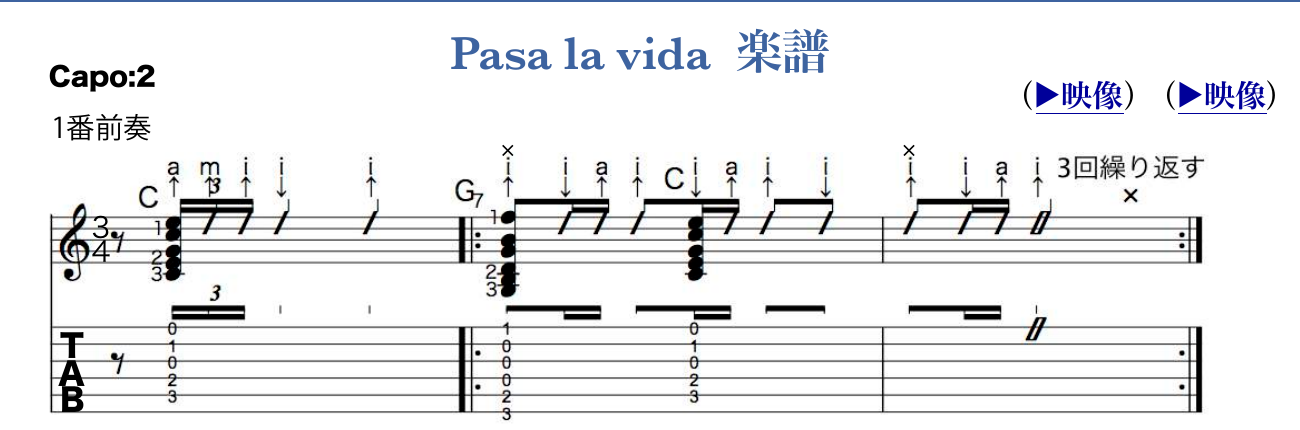
Tap the score to enlarge. Label guide: 楽譜 = score; 1番前奏 = first copla’s introduction; 3回繰り返す = repeat three times. Right-hand letters: i = index, m = middle, a = ring. The blue video-link labels belong to the original booklet and are not clickable in this image.
3. Your turn — same 18 seconds, guitar removed
Replay the model to learn the entry, then start this clip. The clips begin immediately. First try keeping the rhythm on muted strings; next add the C and G7 chord changes. Keep watching the dancers as you play.
The guitarist remains visible as a guide, but the guitar part is removed from the audio. This short opening ends around the start of the first sung section; it is not the complete copla or a test of accompanying a whole song.
Check your progress
- Could you find the entry after watching the model?
- Could you keep the rhythm while watching the dancers?
- Could you make the chord changes without stopping?
If you lost your place, replay the model and shorten the task to rhythm alone. One steady attempt matters more than copying every flourish.
Continue with the complete Sevillanas course
Study six songs using model performances, explanations, score and TAB, then practise with versions without guitar or without singing.
- 33 videos: 19 main lessons and performances, plus 14 practice videos — 7 without guitar and 7 without singing.
- 65-page booklet: English explanations with score, TAB, lyrics and translations. Some original Japanese score labels remain; a label guide is provided.
- Language: original Japanese audio with English reading notes. Spoken lessons have English subtitle translations; performance tracks use brief English orientation captions, not a translation of every sung word.
US$49, one-time purchase. Check the product page for the current checkout total and purchase terms.
See the complete course — US$49
Inside the course, continue with the Pasa la vida model, explanation, close-up and matching practice versions. The opening score is on printed page 19 (PDF page 20).
Meet Toshi & choose your next free sample
Explore 18 accompaniment course topics, watch a rear-view dance excerpt, and share what you would like to learn.